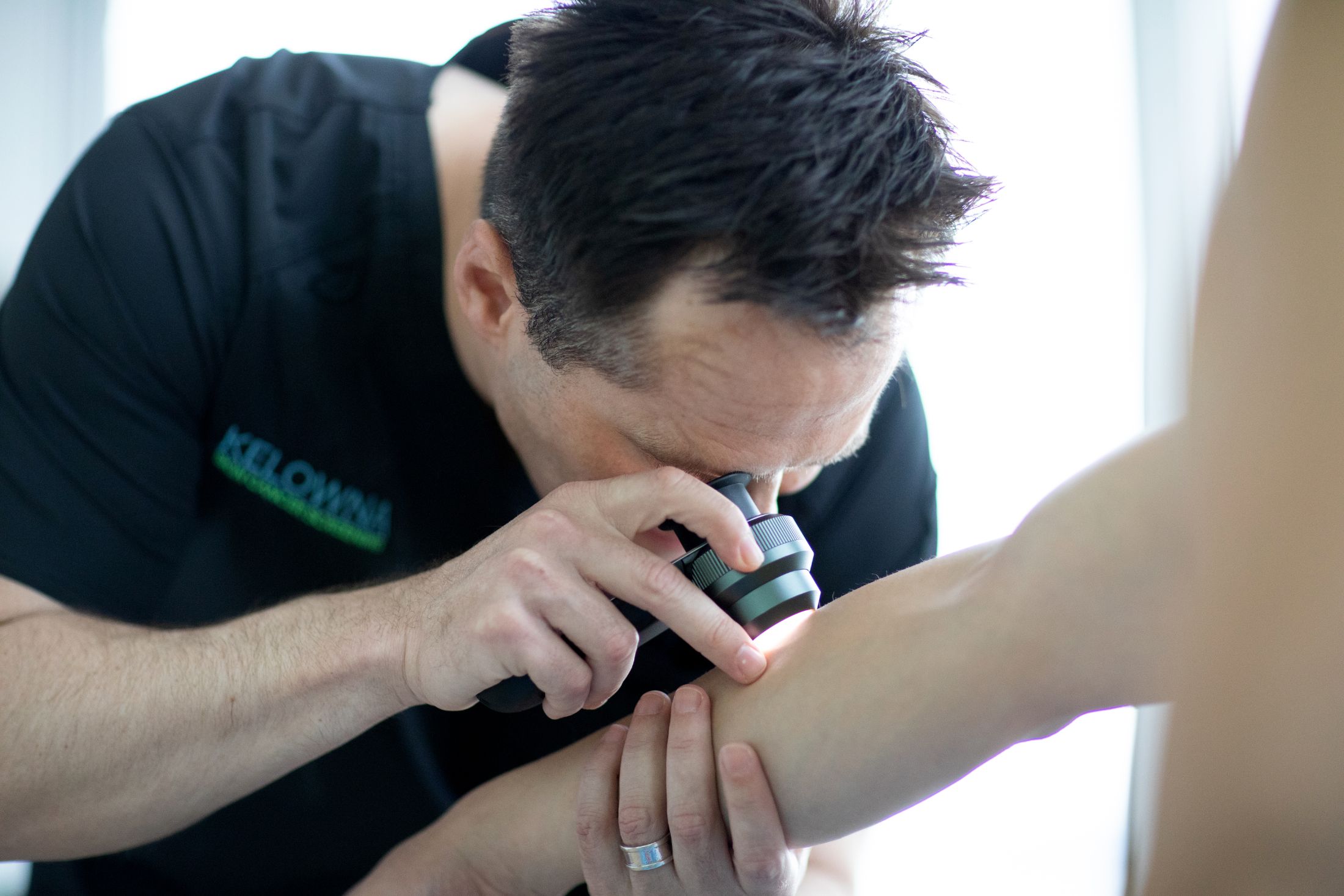
You may have heard the term dermoscopy (also called dermatoscopy) during a dermatology appointment. Just as a stethoscope helps doctors listen to the heart, a dermatoscope helps physicians look closely at the skin. This post offers an overview of what dermoscopy is and how it supports the assessment of skin lesions during a clinical exam.
What Is Dermoscopy?
Dermoscopy is a non-invasive technique that allows physicians to examine structures beneath the surface of the skin using a handheld device with magnification and a bright light. It is painless, quick and does not involve radiation.
Every mole or spot on the skin has certain visual features. Dermoscopy helps physicians see patterns and details that are not visible to the naked eye, which can support a more informed assessment of a lesion.

How Dermoscopy Supports Skin Evaluation
Dermoscopy can help physicians evaluate whether a lesion may require further investigation, such as a biopsy. Because the tool provides additional visual information, it can help reduce uncertainty and guide decision-making during skin examinations.
For individuals at higher risk of developing skin cancer, routine skin checks may be recommended by their healthcare provider. Dermoscopy can enhance these visits by allowing the physician to review subtle features of a lesion and determine whether it has changed since a previous appointment.
Training is important; physicians who use dermoscopy typically complete additional education to learn how to interpret dermoscopic patterns accurately and consistently.
Tracking Changes Over Time
Many dermatoscopes allow physicians to take close-up photographs of lesions. These images can be stored and compared over time, helping clinicians identify whether a spot has changed in size, colour or structure. Monitoring changes can support earlier recognition of concerning features and help guide next steps.
Benefits of Dermoscopy
Dermoscopy offers several advantages during skin examinations:
- It provides more visual detail than the naked eye
- It may help reduce unnecessary biopsies in certain cases
- It supports earlier recognition of changes in the skin
- It allows for photographic documentation over time
A Helpful Addition to Skin Care Assessments
Dermoscopy has become a valuable tool for physicians who assess skin lesions. While it does not replace clinical judgement or biopsy when needed, it adds meaningful information that can help guide decisions about further evaluation. If you have questions about a mole or notice changes in your skin, speaking with your healthcare provider is the best next step.


