


May is Melanoma Awareness Month.
Join us in highlighting the importance of sun safety, early detection, and habits that support long-term skin health. While skin cancer is a serious concern, many steps to reduce ultraviolet (UV) exposure are straightforward to include in everyday routines.
As a family physician with a focused practice in skin cancer (CCFP), Dr. Ben Wiese is dedicated to supporting this awareness. Appointments are currently available at our private skin cancer clinic in Kelowna for those seeking a professional skin check.
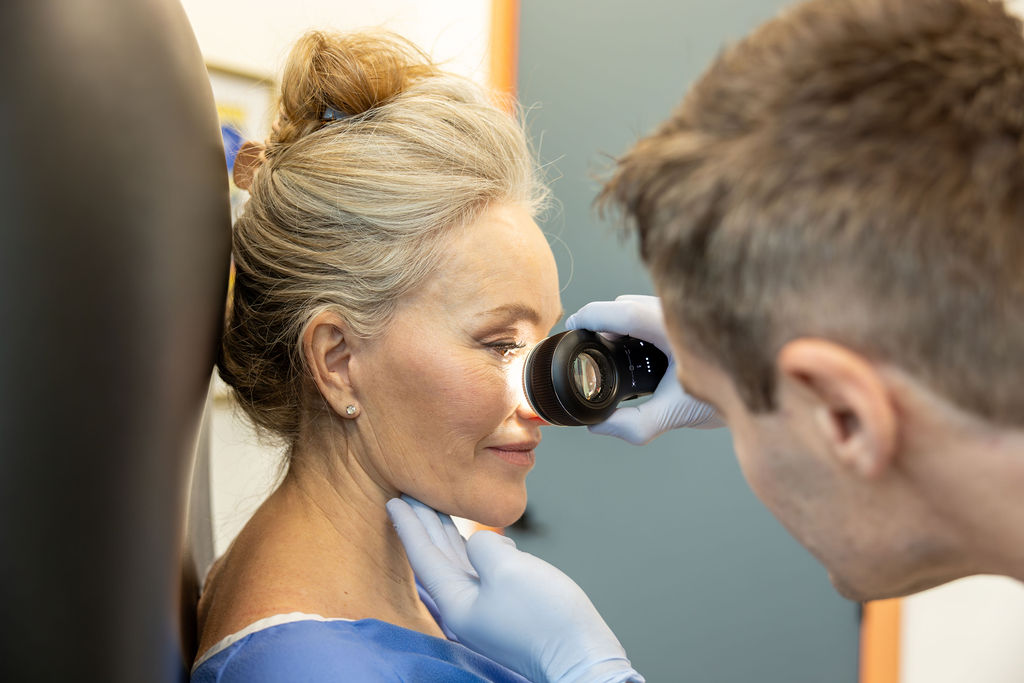
What is melanoma?
Melanoma is a serious form of cancer that begins in the skin’s pigment-producing cells. While it is less common than other skin cancers, it is considered the most aggressive[1] because of its potential to spread to other parts of the body if not identified early.
In British Columbia, the incidence of skin cancer remains a significant public health concern. Recognizing changes in your skin is the first step toward prevention and informed health management.

Melanoma stats & facts.
- Melanoma is the most aggressive of all skin cancers[1]. However, when detected early (Stage 1), the 5-year survival rate is approximately 99%.[2]
- 10,800 Canadians were estimated to be diagnosed with melanoma in 2025. [3]
- Exposure to UV radiation through sunlight, tanning beds, tanning booths or sun lamps is a well-established risk factor for melanoma, in addition to sunburns and cumulative sun damage. [4]
- British Columbia consistently shows some of the highest incidence rates of melanoma in Canada. [4]
May 4th, 2026
Melanoma Monday
Wear black on Melanoma Monday to signify support and raise awareness.
May 31st, 2026
Strides for Melanoma: Virtual 5KM Walk
Join Melanoma Canada’s 5 KM walk, virtually across Canada.


Access professional resources to support skin health.
Learn more about melanoma prevention, assess potential risk factors, and stay informed on early detection practices.
Melanoma Risk Assessment
Use My CancerIQ to determine your personal risk for cancer and what you can do to help lower that risk, provided by Cancer Care Ontario’s program.
The ABCDE’s of Early Detection
The Canadian Skin Cancer Foundation outlines what to look for when examining your skin.
A Guide to Self-Examination
A step-by-step walkthrough of how to check your skin at home, provided by the Canadian Dermatology Association.
In the Community
Listen in on Dr. Ben Wiese discussing skin safety and skin cancer awareness with local media.
Stages of Melanoma
The Canadian Cancer Society outlines how melanoma is classified & the TNM staging system.
Current Facts & Figures
Dive into the latest statistics from the Canadian Cancer Society.
Private assessments in Kelowna.
Get immediate access to advanced skin cancer screening. Public dermatology wait times in British Columbia currently exceed 12-18 months. Our clinic provides a focused, private-pay alternative using advanced diagnostic technology designed to help detect melanoma at its earliest stages.
State-of-the-Art Technology
Our clinic utilizes six FotoFinder Medicam 1000s video dermoscopes synced with the FotoFinder ATBM master. This suite provides AI-supported total body mapping and high-definition video dermoscopy in every examination room.
Tracks Changes Over Time
We use the validated “two-step method” of digital follow-up to detect microscopic changes in lesions, designed to help detect melanoma at its earliest stages.
Fast Access & Comprehensive Care
Urgent concerns are typically seen within 24 hours, and non-urgent as early as 72 hours. The $650 fee includes professional full-body photography, a head-to-toe examination by a trained nurse melanographer, and a full head-to-toe examination by Dr. Wiese.
On-Site Surgical Team
If a biopsy or excision is required based on your screening, it is performed on-site by our MSP-enrolled surgical team at no additional cost to the patient.
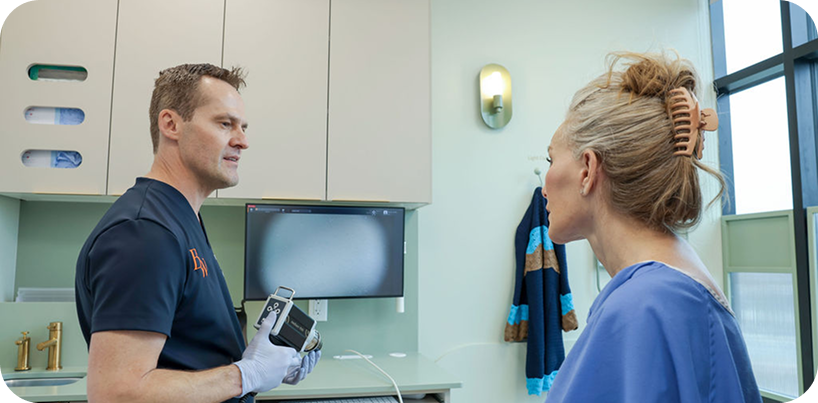
What to expect at a skin cancer screening.
We provide a thorough, patient-focused approach to every skin check. Your appointment follows three clear steps designed to support comprehensive care:

Clinical History & Risk Assessment
We begin with a detailed review of your personal and family history. This allows us to determine your specific risk profile and tailor the assessment to your individual health needs.

Digital Mole Mapping
Next, we utilize high-resolution photography to create a comprehensive photographic record of your skin. This provides a baseline for the objective monitoring and documentation of your skin over time.

Full-Body Examination
Following the digital mapping, Dr. Ben performs a head-to-toe skin check supported by dermoscopy. This non-invasive tool is used to evaluate the skin’s surface and deeper structures, providing a detailed view of any concerning lesions identified during the exam.

How we can help.
Early detection is a critical factor in managing skin health. Dr. Ben Wiese (MBChB, CCFP, MMed in Skin Cancer) is a Family Physician with advanced postgraduate training in skin cancer medicine from the University of Queensland, Australia.
At our private skin cancer clinic in Kelowna, we provide timely, focused assessments for melanoma and potentially concerning skin changes. While Dr. Wiese is not a dermatologist, his practice is dedicated solely to skin cancer medicine.
- No Referral Needed: You do not require a formal referral to book, though clinical notes from your family doctor are welcome.
- Collaborative Care: If requested, full consultation reports can be sent directly back to your doctor’s office.
- Treatment Options: Both surgical and non-surgical options are available based on clinical need.
Note: As a private clinic, all visits are billed directly to the patient. These services are not covered by the Medical Services Plan (MSP).
References:
- BC Cancer. (2021). Melanoma.
- Canadian Cancer Society. (2023). Survival statistics for melanoma skin cancer.
- Canadian Cancer Society. (2025). Melanoma skin cancer statistics.
- Canadian Cancer Society. (2025). Canadian Cancer Statistics.