Most of us think about sun protection from the shoulders up. We remind ourselves to put on sunscreen, grab a hat, find some shade, and protect our eyes. These are all great habits — but the lower body often gets overlooked. This matters because UV exposure comes from more than just overhead sun. Reflection, angle, and activity can all increase the amount of UV reaching your legs.
Most of us think about sun protection from the shoulders up. We remind ourselves to put on sunscreen, grab a hat, find some shade, and protect our eyes. These are all great habits — but the lower body often gets overlooked. This matters because UV exposure comes from more than just overhead sun. Reflection, angle, and activity can all increase the amount of UV reaching your legs.
Considering sun exposure
Daily UV exposure tends to be greatest on the scalp, face, ears, neck, arms, and hands. However, areas like the legs can also receive significant sun, especially during outdoor activities. While skin cancer can develop on sun-exposed areas more often, it can also occur on parts of the body that aren’t regularly exposed.
You can learn more about how UV affects skin health in our Skin Cancer 101 article.

Reflection Matters
Even when the sun is overhead, UV rays can reach your skin from multiple angles. Natural and man-made surfaces reflect sunlight, sometimes quite strongly.
- Water, sand, concrete, and snow can all reflect UV rays upward.
- Historically, reflective tanning mirrors were used to intensify exposure – a reminder of how powerful reflected UV can be.
These reflections increase the UV reaching your lower body, even if you’re facing away from the sun.
Snow & Altitude
Snow is one of the most reflective natural surfaces. UV exposure can remain high even on cold or cloudy winter days.
- Snow can reflect up to 80% of UV radiation (source: World Health Organization).
- UV intensity increases by roughly 10–12% for every 1,000 metres in elevation, due to thinner atmosphere.
If you spend time on BC’s ski hills, especially on warmer days when outer layers come off, sun protection is still important.
Pro tip: UPF clothing is breathable and moisture-wicking, making it easy to layer for sunny winter conditions.
For more on how altitude affects UV, see the WHO Global UV Index Guide.

Sand, Sun & Water
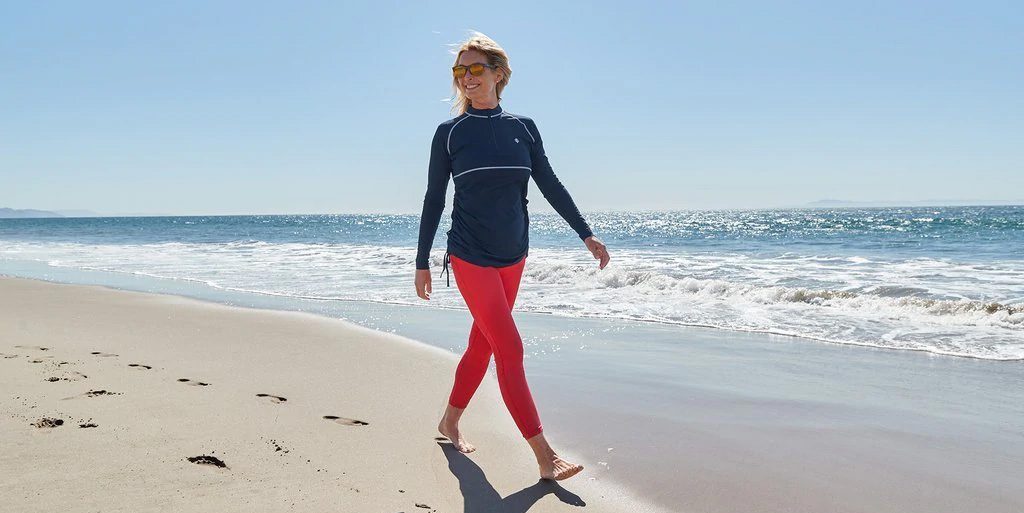
At the beach, layers usually come off rather than on. Swimwear exposes more skin, including the legs, which receive direct and reflected UV.
- Water amplifies sunlight at the surface.
- Even 50 cm underwater, UV can remain about 40% as strong (U.S. Environmental Protection Agency).
- Peak UV hours are typically 10 a.m.–4 p.m., when many people are outside cooling off.
Boating, paddleboarding, and swimming all increase reflected exposure from water and wet surfaces.

Concrete, Pavement & House Paint
On a walk or run, look around – many everyday materials reflect sunlight:
- House paint: up to 22%
- Concrete: ~8–12%
- Asphalt: ~4–8%
- Soil & grass: up to 6%
These small amounts add up during repeated daily exposure.
If you’d like to learn more about incidental UV exposure, our post on Why Sun Protection Is Even More Important at Higher Altitudes explores this further.
How Sun Damage Works
When your skin encounters UV radiation, it produces melanin, a pigment that helps absorb UV rays. This is what darkens the skin — a sign of damage, not health.
- Both UVA and UVB rays can harm skin cells:
- UVA is linked to skin aging.
- UVB is linked to burning.
- Both can cause DNA damage that may lead to skin changes over time.
The Canadian Dermatology Association offers helpful information about UV and skin changes.
Sun-Protective Clothing: A Helpful Tool
Lower body protection doesn’t have to be complicated. UV-protective fabrics offer UPF 50+, wet or dry, which blocks most UV radiation.
Options include:
- Swim leggings and swim skirts
- Lightweight pants and shorts with UPF ratings
- Breathable athletic wear for hiking, gardening, and outdoor sports
UPF swim clothing is designed not to feel heavy in water and resists breakdown from pool chemicals.
To learn more about UPF technology, visit our Guide to UV Protective Clothing.
At Kelowna Skin Cancer Clinic
We focus on helping individuals build sun-safe routines that support long-term skin health. If you have questions about sun protection or want guidance on forming healthy habits, you’re welcome to reach out.


