
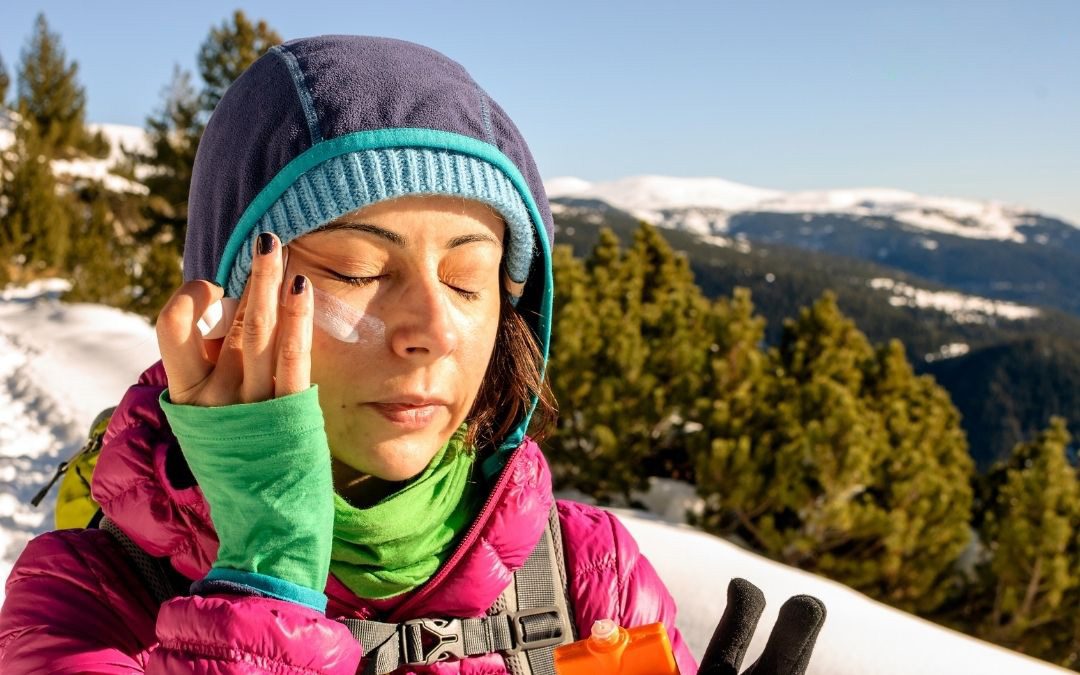
Even though the sun feels weaker in the winter, its effects on your skin continue year round. Many people associate sun protection with summer, but taking steps to protect your skin in colder seasons is just as important. Winter habits can play a role in your long-term skin health.
How the Sun Affects Your Skin
The sun’s ultraviolet rays affect the skin in different ways. UVB rays are linked to sunburn, and UVA rays contribute to tanning. Both types can speed up skin aging and increase the risk of skin cancer. You can learn more about common skin cancers on our skin cancer overview page and how we assess them during skin screenings.
Health Canada also offers helpful guidance on sun safety for anyone spending time outdoors.
Why You Still Need Winter Sun Protection
It may feel like the sun is less harmful in winter, but several factors make UV exposure a concern throughout the season.
1. Sunburns can still happen
UVB levels are lower in the winter, yet they can still lead to sunburn, especially during outdoor activities. You can check daily conditions using the Government of Canada UV Index.
2. Year round protection helps lower skin cancer risk
Research links UV exposure to several forms of skin cancer. Taking daily steps to protect your skin can help reduce this risk over time. For more information, visit our skin cancer information page.
3. UV rays contribute to early skin aging
UV exposure can decrease collagen in the skin, which may lead to lines, sagging, and changes in texture. Regular sun protection supports healthier looking skin as you age.
4. Snow and ice reflect UV rays
Snow can reflect a high percentage of UV rays, increasing exposure during activities like skiing, snowboarding, or winter hiking.
5. The ozone layer is thinner in colder months
The ozone layer helps absorb harmful radiation. During winter it can be thinner, which means more UV rays reach the surface.

Sun Protective Clothing and Sunscreen
Simple steps can help protect your skin through every season. Clothing with UV protection is one of the most reliable options. Sunscreen is also important for areas not covered by clothing. If you are unsure which products may suit your skin, you can discuss this during a skin screening appointment.
Choose a sunscreen that:
- Has an SPF of 30 or higher
- Offers broad spectrum protection against UVA and UVB
- Contains ingredients suited to your skin type
How to apply sunscreen
Apply sunscreen at least 30 minutes before going outside. Reapply every two hours, or more often if you are sweating heavily.
Other Helpful Tips
These small habits can offer added protection outdoors during the winter.
- Wear a broad brimmed hat to protect your face, ears, and scalp
- Use UV protective sunglasses or ski goggles
- Choose a lip balm with UV protection
- Try to limit direct sun exposure between 10:00 am and 4:00 pm.
Taking care of your skin throughout the year supports your overall health. Winter sun protection helps reduce the risk of skin cancer and keeps your skin safer in every season.


